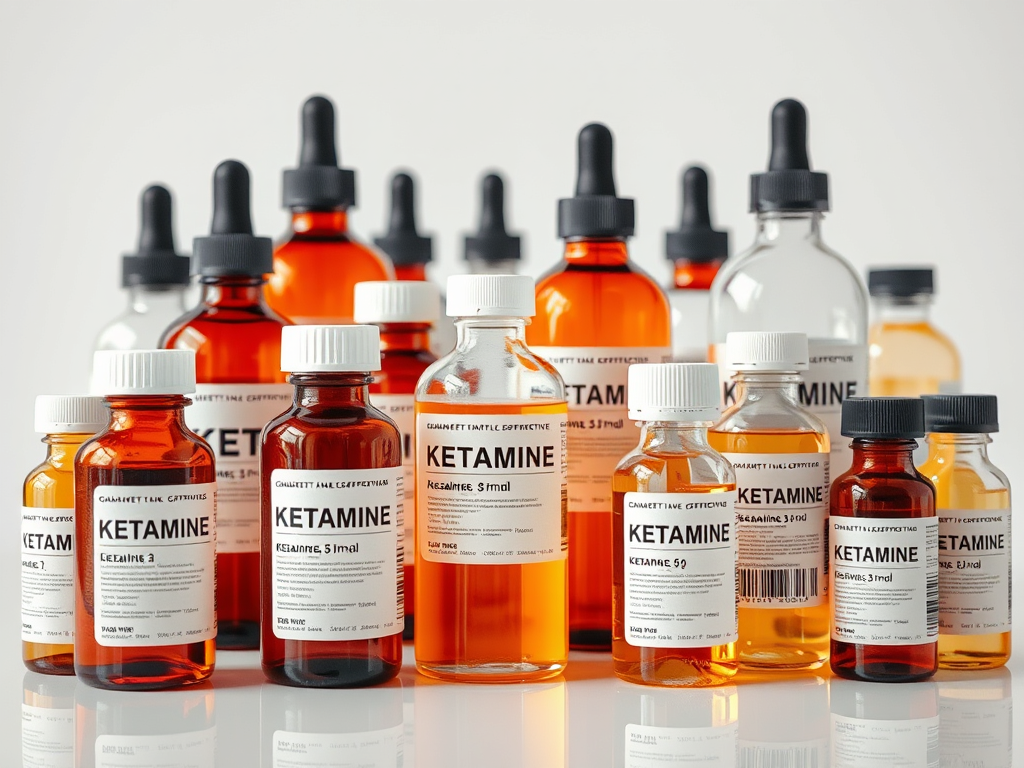
The mechanism of action that Ketamine affects the brain is certainly extremely complex. Research has shown that Ketamine mediates anti-depression effects via several pathways. One of the most important mechanisms is anti-inflammatory effects. Ketamine can effectively decrease elevated levels of inflammatory markers in both animal models of depression and patients with depression.
One in vitro study showed that, in glial cells with LPS-induced inflammatory responses, ketamine was able to reduce the inflammatory markers tumor necrosis factor alpha (TNF-α) and prostaglandin E(2). In another study involving Lipopolysaccharides (LPS)-activated macrophages, ketamine was able to decrease elevated levels of a number of proinflammatory markers, including TNF-α and Interleukin-1β (IL-1β).
In rodents, ketamine decreased cytokine elevation in blood plasma and various sections of the central nervous system (CNS), including the Prefrontal Cortex (PFC), hippocampus, and spinal cord, while also decreasing microglial activation. Elevated levels of Th17 cells, a type of proinflammatory T helper cell, as well as an imbalance of the ratio between Th17 and T-regulatory cells, have both been associated with depression. Ketamine was able to inhibit differentiation and reactivation–the magnitude of cytokine production in already-developed immune cells–of Th17 cells.
In a study involving patients with treatment resistant depression (TRD), a single intravenous dose of ketamine significantly reduced the pro-inflammatory cytokines Interleukin-6 (IL-6) and Interleukin-alpha (IL-ɑ) four hours after injection. Another study also involving patients with TRD showed that ketamine induced rapid decreases of IL-6 and TNF-α elevations. It also found that greater decreases in TNF-α levels from before to after injection correlated with greater reduction in the Montgomery-Asberg Depression Rating Scale (MADRS) score, reflecting an attenuation of depressive symptoms.
Surgery elicits a strong inflammatory response due to the tissue destruction involved. Ketamine, being used primarily as an anesthetic, has been studied in the surgical context for its anti-inflammatory properties. In patients undergoing cardiac surgery under extracorporeal circulation (ECC) (a situation that especially activates the immune system), an intravenous dose of ketamine as an anesthetic significantly reduced the expression of IL-6. Notably, the reduction lasted for seven days after the operation, even though ketamine was out of the patient’s system by that point. In liver transplant subjects, ketamine significantly reduced levels of TNF-ɑ and IL-6. A meta-analysis regarding the effects of ketamine on IL-6 expression in patients after surgery concluded that ketamine, given as an anesthetic before surgery, significantly offset the initial postoperative increase in IL-6 levels. This effect is comparatively pronounced as the effects of methylprednisolone, one of the most potent anti-inflammatory medications, in cardiac surgery.
Source: Roger Li Curieux Academic Journal, issue 50
 Inside the Mind